Imagine entering Gwangjang Market with just one dish in mind. You can leave room for another, but begin with the modest ambition of finding lunch and paying attention to where you eat it. This is a proposed first visit built around a meal, rather than a race through famous foods. Let an unfamiliar name become something you can point to, ask about and choose for yourself.
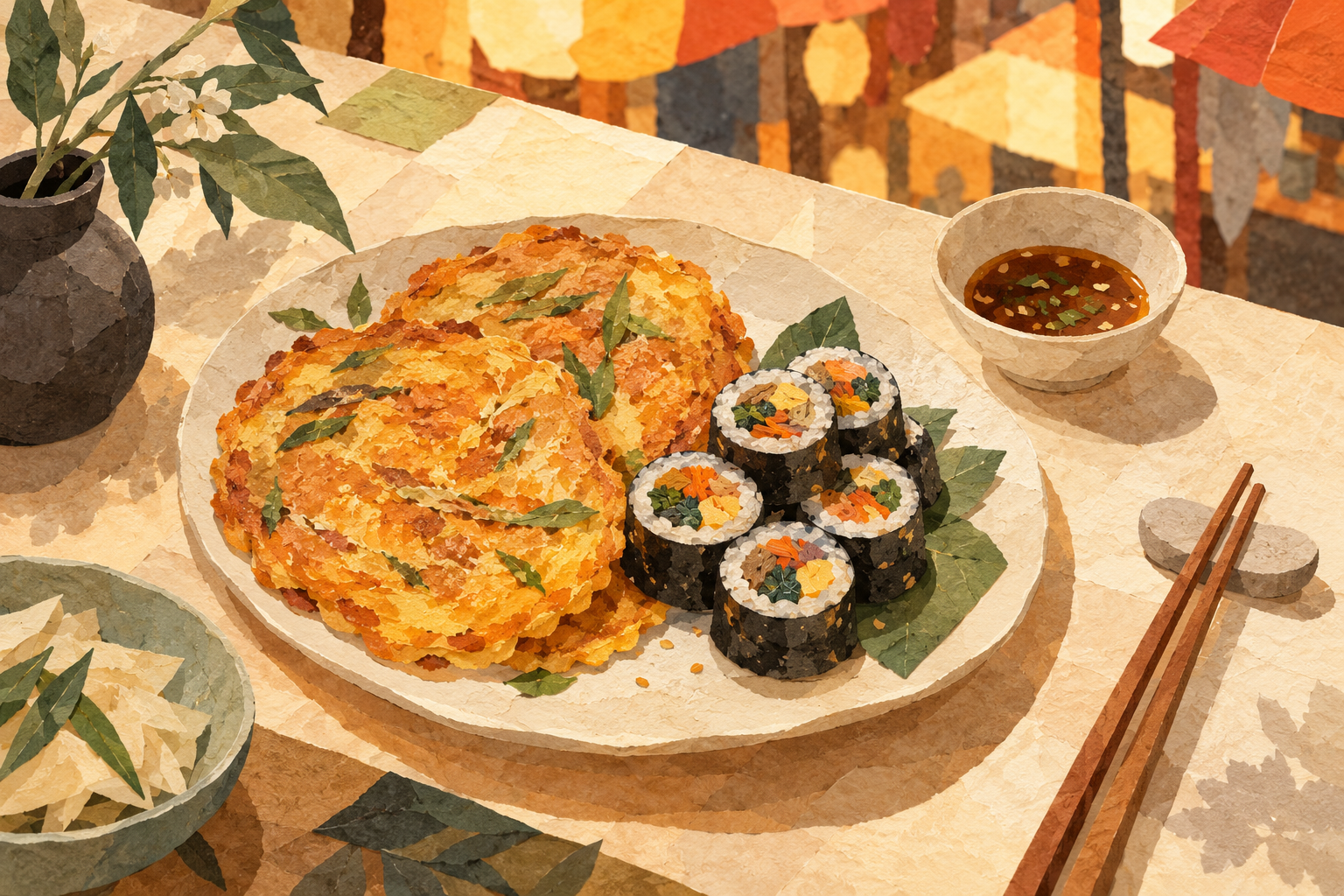
AI-generated food illustration; not a vendor photograph or ingredient reference.
A market lunch can invite a kind of hurry: another stall to locate, another picture to take, another recommendation to compare. Give yourself a different measure of success. If you leave knowing the name of the dish you ordered and remembering the place where you ate it, the visit has already given you something useful.
Before the first plate
Start by understanding the place as more than a food stop. The Korea Tourism Organization describes Gwangjang as a wholesale market with goods ranging from textiles and bedding to groceries and traditional crafts. It identifies the food street through its connections to the East Gate, North Gate 2 and South Gate 1. That broader setting matters: lunch is one activity inside a working market. KTO's Gwangjang introduction offers a useful orientation.
For your own first circuit, resist ordering at the very first sight of something familiar. Look at a few menus, keeping the passage clear as you stop. Notice how a vendor presents portions and how customers place orders. Observation will not reveal every rule, but it can give you a more specific question to ask.
Choose somewhere you can understand what you are buying. Confirm the dish, the portion and the total price before ordering, especially if a display includes several items. Ask whether an indicated price is for one piece, one serving or a combination. These are ordinary purchasing questions, and their answers belong to that particular vendor and order.
The name on your lunch
Bindaetteok is a useful name to recognize: Visit Seoul identifies it as a mung bean pancake among Gwangjang's familiar foods. Its market introduction also names mayak gimbap, assorted savory pancakes, tteokbokki and eomuk. Use these as possibilities to investigate, rather than a menu that every stall is expected to provide. The official Seoul market page gives you a starting vocabulary.
Let the actual menu decide the meal. If a pancake interests you, ask what the serving includes. If you are sharing, decide together whether one portion is a beginning or the whole lunch. You can order more once you understand its size. There is no need to turn curiosity into a large order before you have settled in.
Keep a note of the Korean name alongside the English description you used. A photograph of the menu, taken with permission where appropriate, can help you remember the specific choice. The word you learn at lunch may become useful elsewhere in Korea, while the preparation and serving can still differ from place to place.
If ingredients or preparation matter to your choice, ask that vendor directly. A familiar English dish name is a starting point for the conversation, not a complete description of everything on the plate. Order something else if you cannot establish what you need to know.
The best souvenir from lunch may be one food name you now know how to ask for.
Make room for the market
Once you have ordered, let the meal have your attention. Take photographs briefly, if welcomed, then give the food and your companions their turn. Ask before including a vendor or another diner prominently in a picture. A market may be a destination on your itinerary while remaining someone else's workplace or ordinary lunch stop.
When finished, follow the vendor's instructions for payment and clearing your place. Payment methods, seating arrangements and hours can vary, so ask locally instead of assuming that one experience applies throughout the market. Our cards and cash guide provides background for that small transaction.
Then take another look at the surrounding trade before deciding what comes next. You might browse, choose a second small dish, or leave satisfied. Our Seoul practical-stops guide can support the rest of your day. There is no unfinished scorecard to carry away from lunch; the market will have more to offer if you return.
Plan this lunch
- Find it: Gwangjang Market, 88 Changgyeonggung-ro, Jongno-gu, Seoul.
- Arrival point: Visit Seoul lists Line 1, Jongno 5-ga Station, Exit 8.
- Before ordering: Confirm the item, portion, total price, seating and payment method at your chosen vendor.
- Choose your date: Official listings distinguish general market hours from food-street hours. Check the current listing and the individual business; do not assume every stall follows one schedule.
Source note, checked 26 October 2026: KTO establishes the market's broader trade, food-street orientation and address. Visit Seoul supplies food examples and the station exit. Questions, pacing and photography suggestions are original editorial advice. No individual vendor, menu, price or payment arrangement is guaranteed.