For a suggested afternoon in Gongju's old town, give Jemincheon a modest role: let the stream hold the walk together while a few details draw you aside. A bridge, a place that remembers student lodgings, a small object shaped like a chestnut—each can make the neighborhood more particular. Choose a short section, leave time to pause and allow the water to remain your reference point.
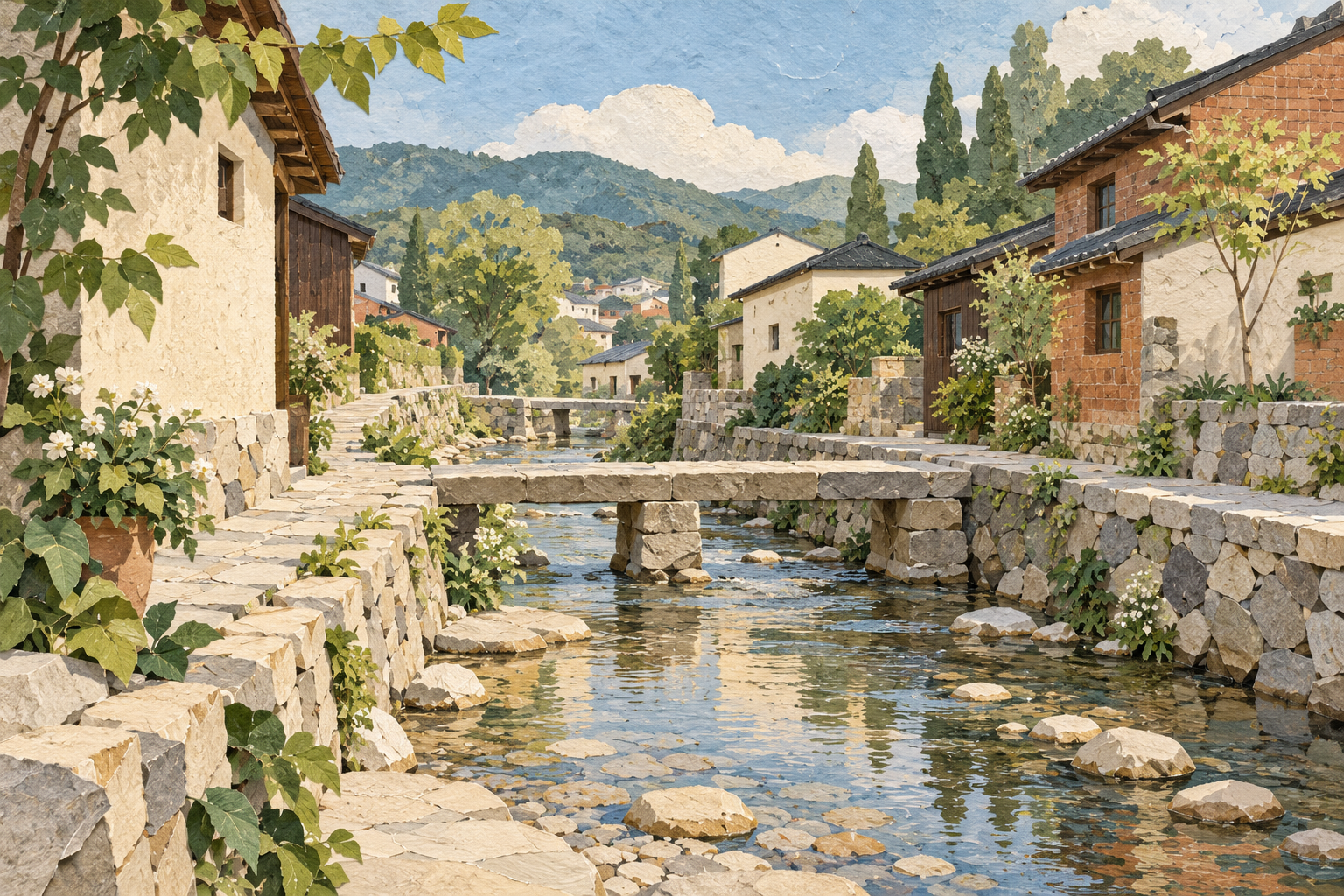
Invented AI-generated conceptual stream scene; not an on-site photograph, map or route reference for Jemincheon.
A stream offers an appealing form of orientation. You can follow its line without deciding the whole afternoon in advance. The interest lies in the relationship between the route and what gathers beside it: a crossing, a doorway, a place to sit, a reason to return to street level.
A line to follow
Gongju City's old-town walking introduction describes Jemincheon flowing through the city from Geumhak Reservoir, with small bridges, murals and cafes along the way. It also notes the ecological restoration of the stream. Those are useful points of orientation; the pace and extent of this proposed walk are yours to decide.
Begin with a crossing you can identify on a current map. Take in the view along the stream, then turn toward the streets on either side. A bridge makes a good place to understand how a neighborhood is connected, provided you stop where other people can pass. Notice which way you would go if you were meeting someone, buying lunch or returning home.
As you continue, let one mural or building catch your attention. Read any explanation available and consider why it has been placed there. The walk gains a different texture when a detail becomes something you can name. You can leave many things unexplored and still make a meaningful acquaintance with a small part of the town.
Rooms beside the water
The city's introduction places Gongju Hasuk Village beside Jungdong Bridge and connects it with memories of the students who once lived in local lodgings. The Hasuk Village's own website describes the present venue as both a cultural space and accommodation in the old town. That dual identity gives an ordinary word—lodging—a place in the story of the neighborhood.
Think about what a room away from home might mean to a student: the daily route to school, a meal, the first sense of belonging to another place. These are prompts for your own imagination, rather than a reconstruction of any particular resident's life. Let the site's interpretation supply the individual facts.
If you want to explore the venue, ask which spaces are open to day visitors and follow the current arrangements. Rooms used for accommodation have their own boundaries. The exterior setting and the neighborhood around it can also be enough for this visit; there is no need to turn a short walk into an overnight stay.
A small stream can hold a walk together while the streets give it a story.
A town in a small object
Contemporary shops offer another scale of encounter. The Korea Tourism Organization's July 2026 regional shopping feature identifies DANPYUNSUN on Jemincheon Culture Street. It describes a range of household and decorative objects, including souvenirs that take their shape from Gongju's chestnut specialty. Treat the listing as an introduction to a possible stop, then check the shop's own current arrangements and actual selection.
The interesting editorial idea is the change from landscape to object. A local association becomes a shape you might use at home: something held, set on a table or attached to keys. If you browse, choose by the object itself. Does its material interest you? Does its size suit the way you live? A souvenir becomes more personal when you can explain what drew you to it.
End with a stretch of the stream again, or with a seat you have chosen for a drink. For another approach to time beside water, our Yeouido afternoon keeps the outing deliberately small. Our Jeong-dong essay considers the stories held by streets and buildings. At Jemincheon, leave with whichever detail gave this portion of Gongju its own character.
Shape your visit
- Orientation: The city lists Jemincheon Culture Street at 201 Muryeong-ro, Gongju. Select a specific crossing and section on a current map.
- Hasuk Village: Its official address is 21 Dangganjiju-gil, Gongju. Check day-visitor access separately from accommodation reservations.
- Shop stop: Confirm DANPYUNSUN's current hours and selection before making it an anchor; no particular product is promised.
- Keep the walk flexible: Follow current path notices and choose your own turning point. Individual indoor venues require their own opening check.
Official sources checked 26 October 2026: Gongju City's walking introduction, Gongju Hasuk Village and KTO's regional shopping feature. The suggested sequence and reflections are original editorial proposals, with no claimed visit, tasting, endorsement or current stock guarantee.
'Visitor Guides' 카테고리의 다른 글
| Under the Eaves: Looking Closer at Jeonju Hanok Village (0) | 2026.10.27 |
|---|---|
| Between Rooflines and Royal Mounds: An Afternoon in Gyeongju (0) | 2026.10.26 |
| The City Above the Station: Reading Choryang's Hillside (0) | 2026.10.26 |
| BTS Bus Stop in Jumunjin: The Album Frame and the Beach Beyond (0) | 2026.10.26 |
| BTS Places in Busan: V's Park, Jimin's Shore (0) | 2026.10.26 |