For an imagined first morning in Jeonju Hanok Village, begin by looking up, then closer. A roofline can draw the eye across a street; a doorway can bring it back to the scale of a single building. This suggested visit follows that change of scale through the village, with Gyeonggijeon as a historical anchor and an optional view from Omokdae to gather the roofs together again.
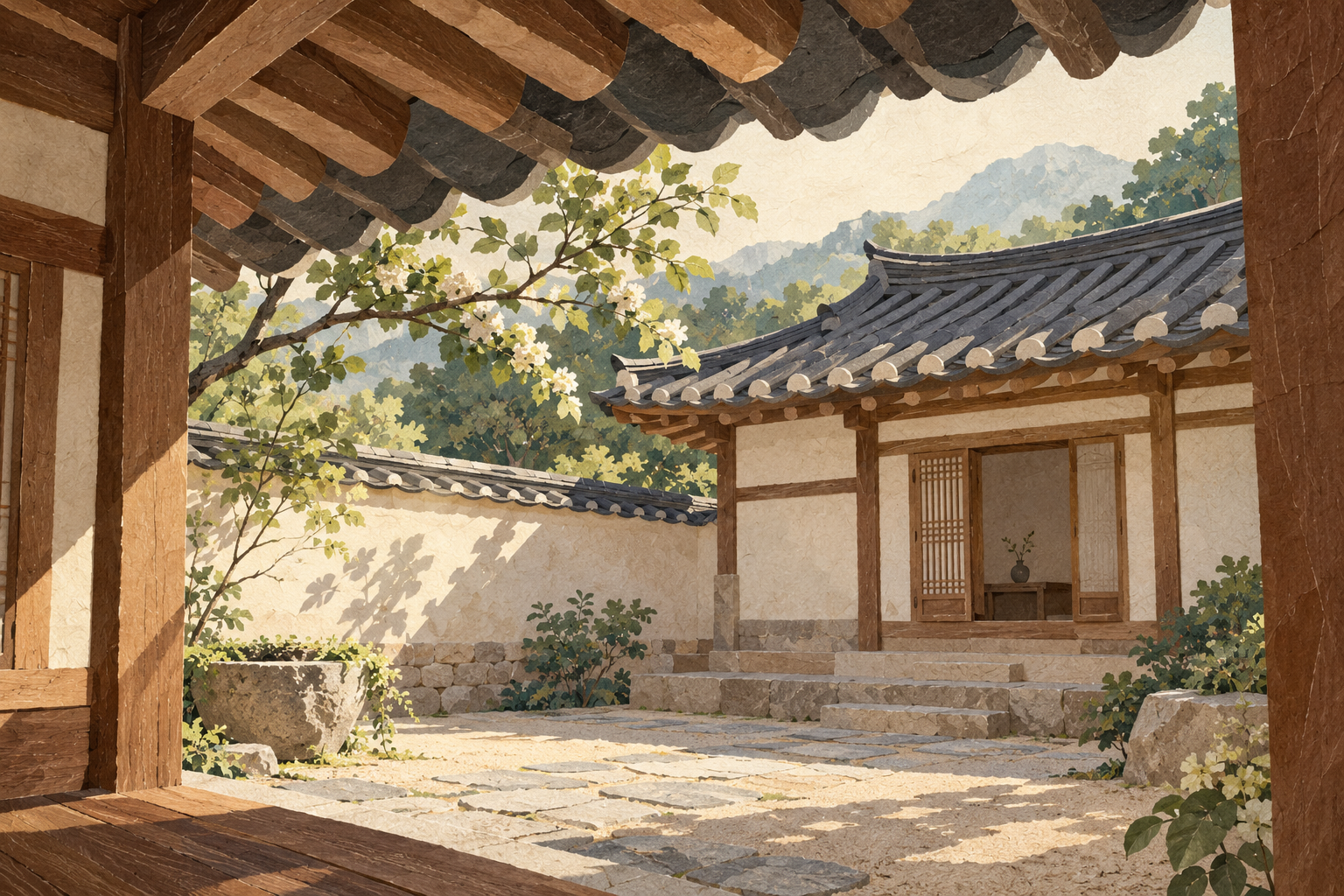
Conceptual AI-generated editorial illustration; not an on-site photograph of a Jeonju house or named venue.
It is tempting to give a place with traditional architecture one broad label and move on. Jeonju rewards a more particular curiosity. Ask when a building took shape, what it was made for and how it is used today. The answers can belong to very different periods.
Under the eaves
The city's Hanok Village introduction places the district in Pungnam-dong and Gyo-dong and describes more than 700 hanok. It connects the area's modern housing history with development beginning around 1910. This is useful context for the first walk: a traditional building form can be part of a changing urban neighborhood, with a history more specific than a timeless scene.
Choose a short stretch of street and let one detail repeat. You might follow the way a roof meets a wall, or look at the proportions of several entrances. Try describing what you can actually see before deciding what it represents. A photograph of a small detail can become a better question than a wide photograph that appears to explain everything.
When a doorway interests you, establish what lies beyond it. A home, a guesthouse, a shop and a cultural venue have different relationships with visitors. Enter where welcomed, and let a closed or private threshold remain part of the street. You can appreciate a building without making its interior part of your itinerary.
A room for a portrait
Give Gyeonggijeon a considered place in the outing. The city's heritage introduction records its establishment in 1410 to enshrine King Taejo's portrait, its destruction during war in 1597 and its rebuilding in 1614. Those dates bring a different historical scale into the village visit, and a specific purpose into your view of the site.
If you choose to enter, begin with that purpose. How does a place built around the preservation of a royal image organize your attention? Read the interpretation available on your date and look again at the spaces you are permitted to visit. You need not understand every part at once; one clearly understood relationship can give the visit substance.
The surrounding Gyeonggijeon-gil is another possible thread. The city's suggested village walks identifies the road along Gyeonggijeon's wall. Walk a portion that appeals to you and consider what a boundary does to the street: where it directs your eye, where it lets you pause, and where it asks you to continue. Keep entrances and the route clear as you look.
A roofline brings a village together; a doorway gives each building its own life.
The roofs gather
If you want a wider view, consider Omokdae. The city's walking page identifies a viewpoint on the route up toward it from which to look across the hanok village. Treat that as an optional change in perspective. Check the route and its slopes against your own plans, and decide on the day whether the climb belongs in your visit.
From an appropriate viewpoint, try finding a roof or street you remember from below. The broader pattern becomes more interesting when it contains a few details you can recognize. Let your attention move between the whole and its parts, then return to street level with one place you would like to understand better.
Leave room for a meal or a drink chosen from what is actually offered. Our market lunch essay explores the pleasure of learning one food name; that same curiosity can accompany your own choice in Jeonju. For another historic neighborhood approached through close looking, read our Jeong-dong afternoon. The common invitation is simple: let a few named details give a place more depth.
Shape your visit
- Area: Jeonju Hanok Village spans Pungnam-dong and Gyo-dong in Wansan-gu, Jeonju.
- Orientation: The official visitor-information address is 99 Girin-daero, Wansan-gu. Use the city's village map to choose your own starting point.
- Gyeonggijeon: Check the site's current admission and opening arrangements separately from the surrounding streets.
- Optional extension: Review Omokdae's route before including the viewpoint; individual businesses and cultural venues keep their own schedules.
Official sources checked 26 October 2026: Jeonju City's village introduction, heritage page, walking suggestions and map. The looking exercises and sequence are original editorial proposals. No personal visit, interior access, activity schedule or particular business is guaranteed.
'Visitor Guides' 카테고리의 다른 글
| A Small Stream, a Longer Story: Following Jemincheon Through Gongju (0) | 2026.10.27 |
|---|---|
| Between Rooflines and Royal Mounds: An Afternoon in Gyeongju (0) | 2026.10.26 |
| The City Above the Station: Reading Choryang's Hillside (0) | 2026.10.26 |
| BTS Bus Stop in Jumunjin: The Album Frame and the Beach Beyond (0) | 2026.10.26 |
| BTS Places in Busan: V's Park, Jimin's Shore (0) | 2026.10.26 |