A miniature building can change the way you look at a full-size street. In Incheon's Open Port area, begin with architectural models, then step outside to read the buildings that remain.
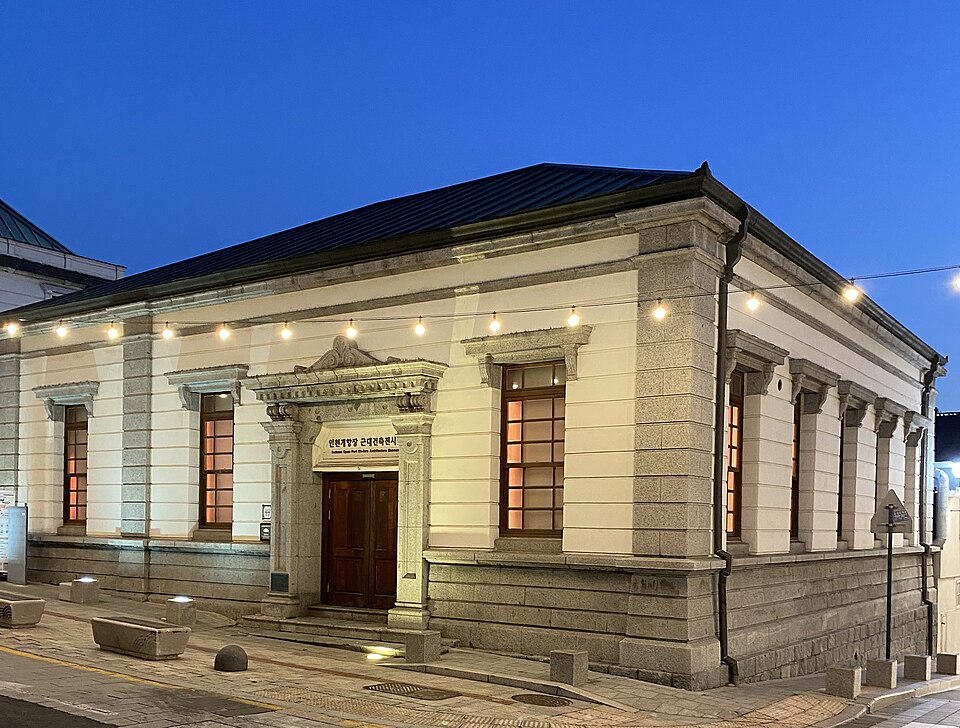
The former 18th Bank branch in Incheon, photographed on 14 September 2024. Photo: Boubloub, “Incheon 18Bank.jpg”, CC0 1.0, via Wikimedia Commons. Resized for display.

The useful thing about a model is that it lets your eyes travel where your feet cannot. You can take in a whole building, consider its plan and compare its proportions with the structure beside it. Incheon's Open Port Modern Architecture Exhibition Center makes that change of scale the starting point for a visit to the surrounding historic streets.
Keep the brief specific: one model, one building and one question to carry between them. Who was this space made for, and how has its use changed? Two small museums on Sinpo-ro 23beon-gil provide enough material for a walk with a point of view.
Begin with the city in miniature
Incheon's official tourism introduction describes models at the Modern Architecture Exhibition Center that show buildings from the port-opening period, including structures that survive and others that have disappeared. It also notes that the miniatures allow visitors to consider interiors and exteriors together. This makes the exhibition useful even if architecture is an occasional interest rather than a hobby.
Choose a model that catches your attention. Look for the main entrance, the outline of the roof and the arrangement of openings. Take a moment to read its label before reaching for the camera. A name and a former purpose will give your later street photograph more substance than a pleasing facade alone.
The missing buildings are worth your attention, too. A historic neighborhood is easier to understand when you allow for what no longer stands there. The models offer a way to think about that absence. They also make a useful distinction between a building preserved on its original site and a representation that helps explain the wider city.
The exhibition building is an exhibit
The center's own home gives you a second scale to read. An Incheon tourism feature identifies it as a former bank branch built in 1890, with a single-story form, a Japanese-style roof and surviving features associated with its banking use, including vaults and entrances. You are looking at architectural history while standing inside a building that participates in it.
Consider how a bank announces itself to the street. Which parts of its arrangement suggest entry, security or a public face? Let the exhibition and its labels supply the history, then use the building to test how much of that former purpose you can recognize. Keep specific names and dates with the label that establishes them.
At the Incheon Open Port Museum, the subject broadens. KTO describes a former bank building in a late Renaissance architectural style, now housing permanent exhibitions about modern culture introduced after the port opened. The two places can be read together: one helps you see buildings as a collection, while the other introduces the cultural changes behind the streets.
The model gives you the whole building; the street gives it scale.
Return to the street with a question
Once outside, resist the pressure to photograph every old-looking frontage. Choose the building you now know something about and give it a second look. Stand where ordinary pedestrian access allows, leave doorways clear and compare the details you remember with what is in front of you.
Look at the building's relationship to its neighbors as well as its facade. A museum visit encourages close attention to an individual object; a street reminds you that buildings have edges, approaches and people passing between them. That shift is the point of this outing. The walk can stay compact while the questions become larger.
Use a current map for the two exact addresses, and choose your indoor order around opening days. Lunch or a drink can follow from what is open when you arrive. The museums should carry the plan; a particular shop, gallery program or temporary exhibition can remain an optional addition.
For another view of Korea's urban history, our Choryang story reads Busan from its hillside streets. Our Jemincheon feature follows the smaller scale of Gongju's old town. They offer separate city visits with the same reward: a place becomes clearer when you know what you are looking at.
Two addresses to keep together
- Models: Incheon Open Port Modern Architecture Exhibition Center, 77 Sinpo-ro 23beon-gil, Incheon.
- Port history: Incheon Open Port Museum, 89 Sinpo-ro 23beon-gil, Incheon.
- Indoor planning: Incheon Tourism lists the architecture hall at 09:00–18:00, last admission 17:30, closed Mondays. Check its current notices.
- Museum planning: KTO lists the Open Port Museum at 09:00–18:00, last admission 17:30, with Monday, January 1 and Seollal/Chuseok holiday closures. Verify the date you intend to enter.
Primary sources checked 27 October 2026: Incheon Tourism's architecture center introduction and museum feature, plus KTO's Open Port Museum listing.
'Visitor Guides' 카테고리의 다른 글
| Room Between Appointments: An Everyday Visit to Seoul Forest (0) | 2026.10.27 |
|---|---|
| The River Holds the Village: Visiting Hahoe in Andong (0) | 2026.10.27 |
| A Garden in Several Views: Looking Closely at Suncheon (0) | 2026.10.27 |
| Mokpo Open Port: The History Behind the Facades (0) | 2026.10.27 |
| Tongyeong at Three Levels: Gangguan, the Market and Dongpirang (0) | 2026.10.27 |