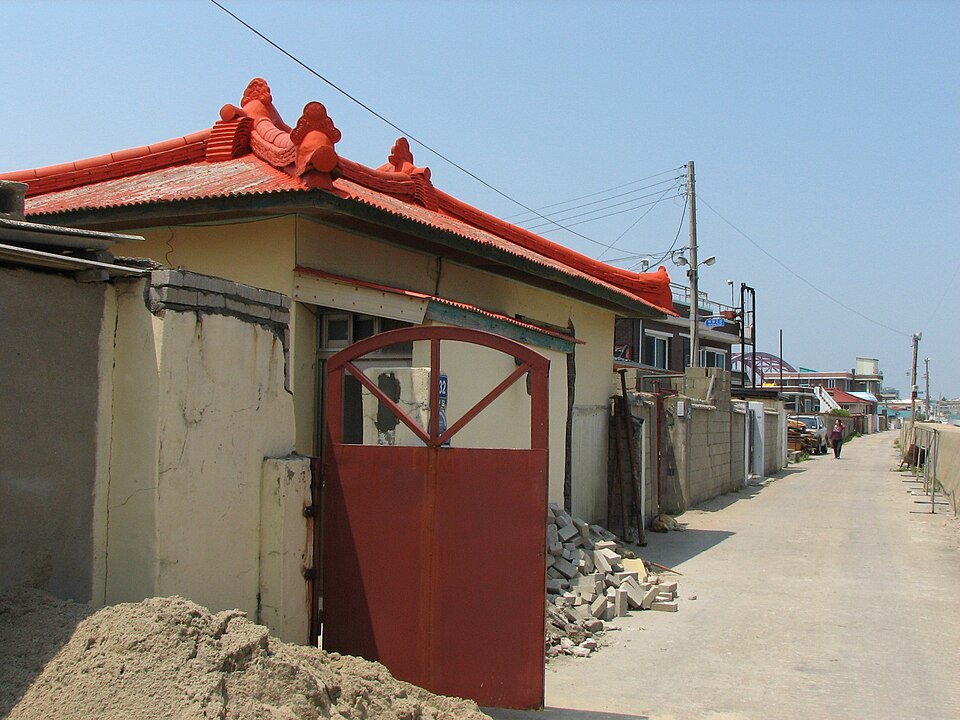
An archival view of Abai Village in Sokcho, photographed on 24 May 2009. Photo: Marie (knittymarie), “Abai Village.jpg”, CC BY-SA 2.0, via Wikimedia Commons. Resized for display.

A short stretch of water can carry a large part of a city's story. At Abai Village in Sokcho, begin with the relationship between the settlement and the harbor rather than with a food photograph. This is a neighborhood whose visitor appeal sits beside a history of displacement. A good visit leaves space for both, without asking today's residents to become exhibits.
Begin with the reason people stayed
The Korea Tourism Organization's village introduction places Abai Village in Cheongho-dong and traces its formation to Korean War refugees, especially people from Hamgyeong-do. It explains abai as a familiar term for an older man in that region's dialect. The name carries a connection to a home elsewhere.
Keep that context close as you move through the public lanes. A mural can prompt a question, but it cannot tell you everything about the person who lives behind a wall. Read any available interpretation, keep your voice low near homes and leave doors, household belongings and residents out of photographs unless they have agreed.
Do not go searching for a neighborhood frozen in the past. Its present appearance is also part of the story: a place can hold memories of departure while continuing to work, eat, build and change.
See the crossing as a connection
The Ministry of Culture, Sports and Tourism's Sokcho feature describes the gaetbae as a simple ferry without an engine, connecting the village and downtown across the waterway between Cheongchoho Lake and the sea. It also notes that bridges provide other access. The crossing belongs to the everyday geography of the settlement, even when visitors experience it as an attraction.
If the ferry is operating and suits your needs, pay attention to the landing and the changing angle of the shore. Keep boarding areas clear and follow the crew's instructions. Treat the ride as transport shared with other people, rather than a stage for a photograph.
If you prefer another approach, the visit still makes sense. Before leaving your accommodation, check the actual route to the side of the village you intend to use and save a return option. Weather, boarding conditions and personal mobility needs deserve more weight than completing a particular crossing.
A meal without a checklist
KTO identifies regional dishes in the restaurant area, including Hamheung-style noodles, stuffed squid and North Korean-style sausage soup. You can choose one meal that interests you without turning lunch into a contest to order everything associated with Sokcho.
Look at the menu before sitting down. Ask about ingredients that matter to you, especially with stuffed dishes whose fillings vary. Neither an English dish name nor a photograph establishes suitability for an allergy or a dietary requirement. Choose a manageable order and let the meal remain a meal, rather than evidence that you have completed the neighborhood.
For deeper historical context, both KTO and the ministry point to restored refugee houses at Sokcho Museum. Consider the museum as a separate, deliberately planned visit; do not assume that the original settlement alone can explain every aspect of displaced life.
Leave room around the story
Build your outing around a public-lane walk, a look at the water and an optional meal. Check current village and ferry information through the links on the official listings; this feature does not promise a timetable or a particular crossing condition.
Our Choryang hillside story offers another way to read a Korean neighborhood through its history. The Tongyeong harbor feature follows the relationship between water, work and residential streets in a different coastal city.
Primary sources checked 29 October 2026: KTO's Abai Village listing and MCST's Sokcho feature (published 11 November 2024). Visit sequence and photography suggestions are original editorial proposals.
'Visitor Guides' 카테고리의 다른 글
| Soswaewon, Damyang: Water, Walls and a Place for Company (0) | 2026.11.07 |
|---|---|
| Seongeup Folk Village, Jeju: Stone Walls Around Everyday Life (0) | 2026.11.07 |
| Gwanghalluwon, Namwon: A Garden With More Than One Story (0) | 2026.11.07 |
| Ganghwa Dolmen: The Space Around an Ancient Stone (0) | 2026.11.07 |
| Naesosa, Buan: From Fir Trees to Flowers Carved in Wood (0) | 2026.11.07 |