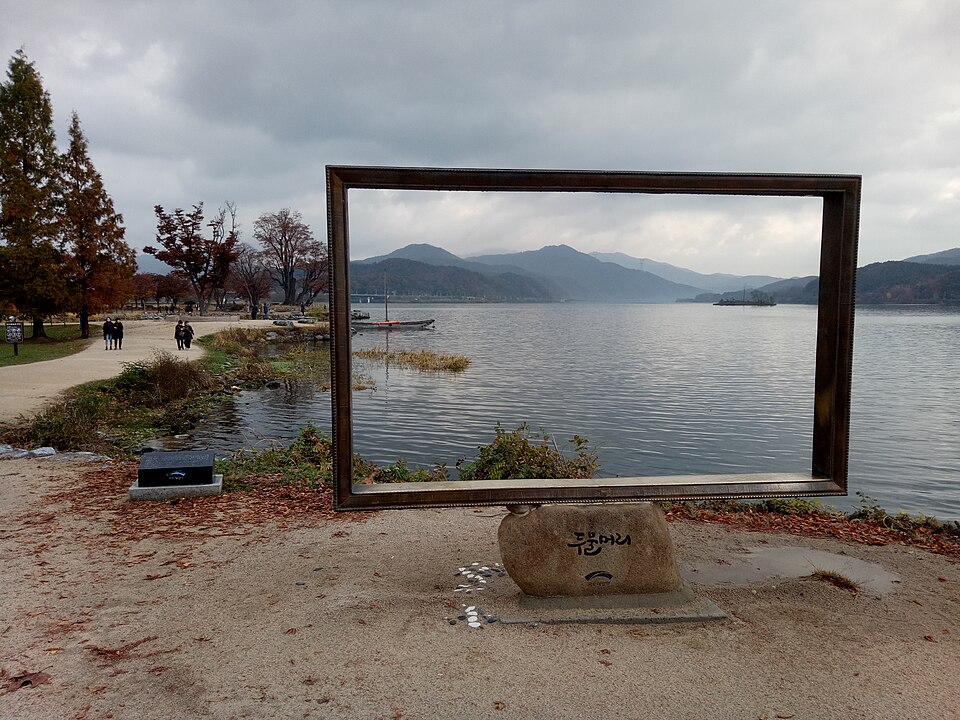
Dumulmeori in Yangpyeong, photographed on 11 November 2019. Photo: Foxy1219, “Yangpyeong Dumulmeori 2019-11-11.jpg”, CC BY-SA 4.0, via Wikimedia Commons. Resized for display.

Dumulmeori’s name is a lesson in geography: this is where the Bukhangang and Namhangang meet. A visit to this Yangpyeong river junction becomes richer when the map, the former ferry landing and the waterside landscape belong to the same story.
Before saving a riverside photograph, save a map of the two rivers. It gives the outing a subject larger than a single tree or stretch of water. Dumulmeori sits at a junction in a river system, and the place’s history depends on that meeting as much as its modern appeal to photographers.
Find the two waters
The municipality identifies Dumulmeori with the confluence of the Bukhangang and Namhangang into the Hangang. The destination is in Yangseo-myeon, Yangpyeong County. It is worth entering the full place name when planning your journey: “Yangpyeong Dumulmeori” is more useful than a broad search for the Han River outside Seoul.
At Dumulgyeong, Yangpyeong’s visitor account describes a marker and an old map set into the ground. Make that interpretation an early stop. It can help translate a wide waterside view into the routes and place names you saw on your screen. Follow the designated approach in use on the day, rather than treating the edge of the water as a shortcut.
The county also identifies a reed rest area along the Bukhangang side. That offers a second part of the visit beyond the best-known landmark tree. The change of subject is modest but worthwhile: a confluence is an area with several edges, vegetation and viewpoints, rather than a single point at which everyone must stand.
Plan around the daylight and weather available to you. You do not need an elaborate photography timetable to understand the junction. A map and the site’s interpretation can explain the meeting of the rivers even when the surface of the water does not display a clear dividing line.
The landing remembers movement
KTO’s description includes willows, old zelkova trees and a ferry landing. Yangpyeong’s cultural and ecological map places that landing within the older journey toward Hanyang, the historic capital. A place now approached for a day out once belonged to a network of travel along the water.
Keep that purpose in mind near the landing. The history is about movement: people and goods depending on waterways, with a stopping place before the capital. It gives the riverbank a different meaning from a scenic backdrop chosen only for a photograph.
There is room for both interests. Take the picture you came for, then leave enough of the outing unassigned to follow a public waterside path and return to the map. The most useful souvenir may be a better understanding of how the river running through Seoul is connected to landscapes farther upstream.
Food and an indoor break can remain flexible parts of the day. Confirm a business’s actual menu and opening arrangements if you plan a stop; the confluence itself does not require a particular snack, café or packaged tour. Match the length of your visit to your return journey, and check the current route home before leaving your transport stop.
Water takes another form in our Gongju Jemincheon story, which follows a small urban stream. The Taehwagang feature considers a river landscape through Ulsan’s bamboo grove.
Map note: KTO lists 145 Dumulmeori-gil, Yangseo-myeon, Yangpyeong-gun. Yangpyeong’s own attraction page uses the parcel address Yangsu-ri 697. Use the destination name with Yangpyeong when checking the current approach and visitor notices. Nearby attractions have their own entrances and operating arrangements.
Official sources checked 29 October 2026: KTO’s Yangpyeong Dumulmeori listing, Yangpyeong’s destination interpretation and county cultural and ecological map.
'Visitor Guides' 카테고리의 다른 글
| Jinjuseong, Jinju: Stone Walls, War Records and the Namgang (0) | 2026.10.29 |
|---|---|
| Mireuksa Temple Site, Iksan: The Temple in Its Surviving Pieces (0) | 2026.10.29 |
| Ojukheon, Gangneung: A House Before It Became a Landmark (0) | 2026.10.29 |
| Korea Tourist Tax Refund: Immediate vs General Refunds (0) | 2026.10.29 |
| Haemieupseong, Seosan: The Town Names Written Into a Fortress (0) | 2026.10.28 |