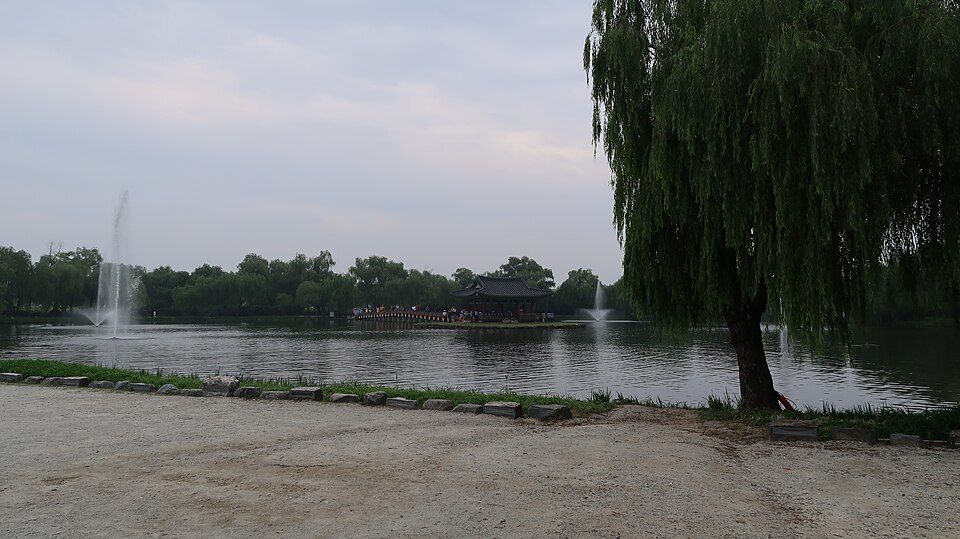
Gungnamji in Buyeo, photographed on 10 September 2017. Photo: Korearoadtour, “궁남지-Gungnamji-5.jpg”, CC BY-SA 4.0, via Wikimedia Commons. Resized for display.

A small island and its pavilion give Gungnamji a clear center, but the view keeps changing as you move around the water. Make this Buyeo visit a walk between a historical record, a restored pond and the paths around it.
An island makes you look across water before you decide how to approach it. At Gungnamji, Poryongjeong Pavilion gives that island a recognizable form. The surrounding paths offer the more interesting decision: which view will you take before heading toward the middle?
This is a good place to begin with a little history and then put the phone away for part of the walk. Gungnamji belongs to Seodong Park in Buyeo. Its name refers to a pond south of the palace, and the historical account behind it is as important as the photograph of the pavilion.
Read the record, then look at the present pond
Buyeo County's introduction cites the Samguksagi, the historical chronicle of the Three Kingdoms. It connects the pond with King Mu of Baekje and a record dated to 634, describing water brought to the site, willows around the banks and an island in the middle. The island was associated with a legendary mountain of immortals in Chinese tradition.
Those details describe a landscape shaped around an idea. Water, planting and an island were arranged to create a particular setting, rather than simply occupying leftover ground. As you follow a public path, consider how the middle of the pond gathers the view and how the bank gives you different positions from which to see it.
The county also explains that the present pond was restored in 1965–67. Keep that date beside the older account. What you visit is a heritage landscape with a modern restoration history, and understanding both periods gives the walk more substance. A pavilion photograph can be beautiful while remaining only one part of the site's story.
Give the island more than one angle
Poryongjeong and the wooden bridge give this part of the pond a clear focus. Use them as a center of attention rather than rushing straight toward the pavilion. Begin from an open bank-side position and notice how much water lies between you and the island.
Then move along the permitted path until the relationship changes. The bridge may become more prominent in your frame, or a tree may create a different edge to the view. Take a second photograph and compare it with the first. You are recording the same small composition from two places, which is often enough to make a landscape feel less like a single image on a screen.
Where access is open, approach the bridge with other visitors in mind and follow any local restrictions. The crossing has a different purpose from the wider path: people need room to pass through it. Keep extended photography to a position where you can stop without turning a shared route into a private session.
The island holds the center. The walk around it keeps changing the picture.
Let the paths determine the scale
Buyeo's accessible-tourism map is useful for planning. It identifies an east-gate approach, rest areas, Poryongjeong and the west-gate side, together with toilets, accessible toilets and tactile audio information. Read it before selecting the entrance that works for your group.
If someone needs a particular type of path or toilet, confirm the current arrangement with the visitor information service. A mapped accessible route is a helpful starting point; temporary works, the exact entrance and the facilities needed by your companion still deserve a specific check.
Choose daylight for this proposed visit. That gives you a straightforward way to read the signs and compare the pond's views without depending on an evening lighting program. The wider park is also associated with lotus displays, but a flower-led trip needs a current seasonal check. The island, pavilion and restoration history can give the outing a purpose at other times.
Keep a meal or another Buyeo stop separate in your plan, with its own opening conditions. For related travel in Chungcheong, our Jemincheon story follows water through Gongju's old town. Our Jeong-dong feature offers a Seoul comparison, placing a palace boundary beside the everyday city. At Gungnamji, the focus stays smaller: a pond and the changing relationship between its center and its edge.
Choose your starting point
- Destination: Seodong Park and Gungnamji Pond, 52 Gungnam-ro, Buyeo-eup, Buyeo. Save the entrance you intend to use.
- Admission: KTO lists admission as free and the site as open year-round. Check local notices for access changes or a separately organized event.
- Access needs: Consult the county's accessible visitor map for entrances, rest areas and toilet locations before choosing a route.
- Information: The local tourism inquiry number listed by KTO is +82-41-830-2880. Ask about the particular entrance or facility you need.
Visitor references: Buyeo County's history and visitor information, its accessible visitor map, KTO's destination listing and KTO's pavilion and pond feature.
'Visitor Guides' 카테고리의 다른 글
| Dongguksa, Gunsan: A Temple Corridor and the History Beyond It (0) | 2026.10.28 |
|---|---|
| Yangnim-dong, Gwangju: Houses, Meeting Rooms and the Things That Stayed (0) | 2026.10.28 |
| Written in Rows: The Tea Landscape at Daehan Dawon (0) | 2026.10.28 |
| Inside the Bamboo, Beside the River: Taehwagang in Ulsan (0) | 2026.10.28 |
| Seomun Market by Day: Cloth, Flat Dumplings and a Proper Daegu Lunch (0) | 2026.10.28 |