Uirimji’s water still serves farmland. Around this reservoir in Jecheon, pavilions, old trees and a local history museum bring together two pleasures: spending time beside a lake and discovering the work that made the landscape possible.
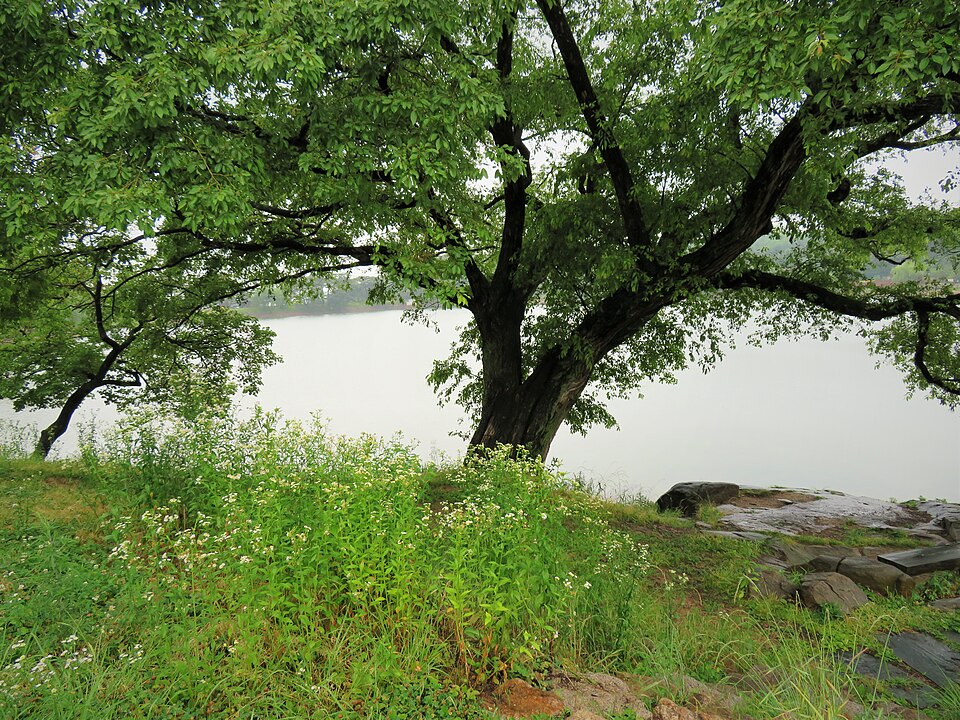
Uirimji Reservoir in Jecheon, photographed on 23 June 2016. Photo: Kyle Magnuson, “Uirimji Reservoir (3) (32813000084).jpg”, CC BY 2.0, via Wikimedia Commons. Resized for display.

Water kept for a purpose
A reservoir changes the question you ask of a lake. Where does its water come from, how is it held, and where does it go? Uirimji is a good place to carry those questions into an ordinary afternoon outdoors. Jecheon’s museum account identifies its continuing agricultural role, connecting the water with the city’s farming culture.
That practical purpose gives the view a larger setting. A body of stored water belongs to fields beyond its shoreline. The connection may be less immediately visible than a pavilion, but it is central to what this place is. Allow some of your visit to be about that relationship rather than measuring the outing only by the distance walked.
Its chronology also deserves care. Jecheon’s official account says the precise construction date is unknown and presents stories about the musician Ureuk as oral tradition. Those stories are part of the reservoir’s cultural life. They should not be converted into an exact, proven foundation year when you explain the place to someone else.
Two pavilions, two dates
Specific names help organize the shoreline. The city dates Yeonghojeong Pavilion to 1807 and Gyeonghoru to 1948. It also describes old pines and weeping willows around the reservoir. These features belong to a landscape that has accumulated structures and associations over time.
The two pavilion dates make that accumulation tangible. A traditional-looking roof does not by itself tell you when a building was made. Use the interpretation for the named structure in front of you, and give its own story room rather than assigning the whole lakeside one ancient age.
For a comfortable visit, think in terms of a shoreline outing with stopping places. You can pause near a pavilion, continue to another public viewpoint, and leave time for sitting. A full circuit is an option to assess against the current paths and the time you have, rather than a task that determines the value of the visit.
Stay on the designated routes around the reservoir and follow any local closures. Waterfall and fountain attractions have operating arrangements of their own; their availability should not be the only reason for traveling here. The water, trees and reservoir history provide a substantial visit together.
The museum brings the fields closer
Uirimji History Museum opened in 2019. Jecheon describes its permanent themes as the reservoir’s history, irrigation and farming culture, and the ecology of the surrounding area. These are useful subjects to take indoors after spending time beside the water.
Give the irrigation material particular attention. A reservoir’s achievement is not simply the amount of water it contains. It is also the relationship between storage, management and the land that depends on it. The museum can supply the local explanation that a broad lake view cannot carry on its own.
Check the museum’s own schedule when shaping the afternoon. You can leave a meal or another Jecheon stop outside the reservoir visit, without making every activity depend on a single opening time.
Two other designed waterside places offer different perspectives: Gungnamji in Buyeo centers on a garden pond, while Suncheon Bay National Garden works across a much larger designed landscape.
Visit particulars: The reservoir listing uses 33 Uirimji-ro, Jecheon. The history museum is at 7 Uirim-daero 47-gil. Jecheon lists Monday closure for the museum; its reservoir information also flags Monday suspension for the Yongchu waterfall attraction and fountain. Recheck current notices for the individual facility you intend to visit.
Official sources checked 7 November 2026: KTO’s Uirimji listing, Jecheon’s reservoir history and city history-museum guide.
'Visitor Guides' 카테고리의 다른 글
| Soswaewon, Damyang: Water, Walls and a Place for Company (0) | 2026.11.07 |
|---|---|
| Seongeup Folk Village, Jeju: Stone Walls Around Everyday Life (0) | 2026.11.07 |
| Abai Village, Sokcho: The Waterway and the Lives Beside It (0) | 2026.11.07 |
| Gwanghalluwon, Namwon: A Garden With More Than One Story (0) | 2026.11.07 |
| Ganghwa Dolmen: The Space Around an Ancient Stone (0) | 2026.11.07 |